
Published · Reviewed · M&T Adjusters
This article provides general educational information. It does not interpret any policy, provide legal or safety advice, or guarantee coverage, payment, or results. The applicable policy, endorsements, facts of the loss, and insurer process control each claim. For health, fire, electrical, structural, or contamination hazards, follow public-authority and qualified-professional instructions.
Start with one damage list and separate contacts
After damage to a Florida condominium, create one factual list of affected items and track what you sent to your own insurer and the association separately. A manager’s visit does not by itself confirm that your insurer received notice, or that either party accepted responsibility for a repair. Follow your policy’s reporting requirements promptly while coordinating with management.
Florida DFS describes HO-6 unit-owner coverage as including personal property, liability and some structural coverage in its Homeowners Insurance Overview, linked below. Florida Statutes section 718.111(11), also linked below, addresses association insurance and reconstruction responsibilities. These sources explain why location alone does not settle who insures or repairs an item. This guide organizes questions; it does not allocate legal responsibility.
1. Describe the component, not just the room
Use a separate line for each affected component: ceiling surface, flooring, cabinet, appliance or movable belongings. Record its location, what you actually observed, when you first noticed it and the corresponding photo filename. Keep the date of discovery separate from any estimated date or suspected cause of damage.
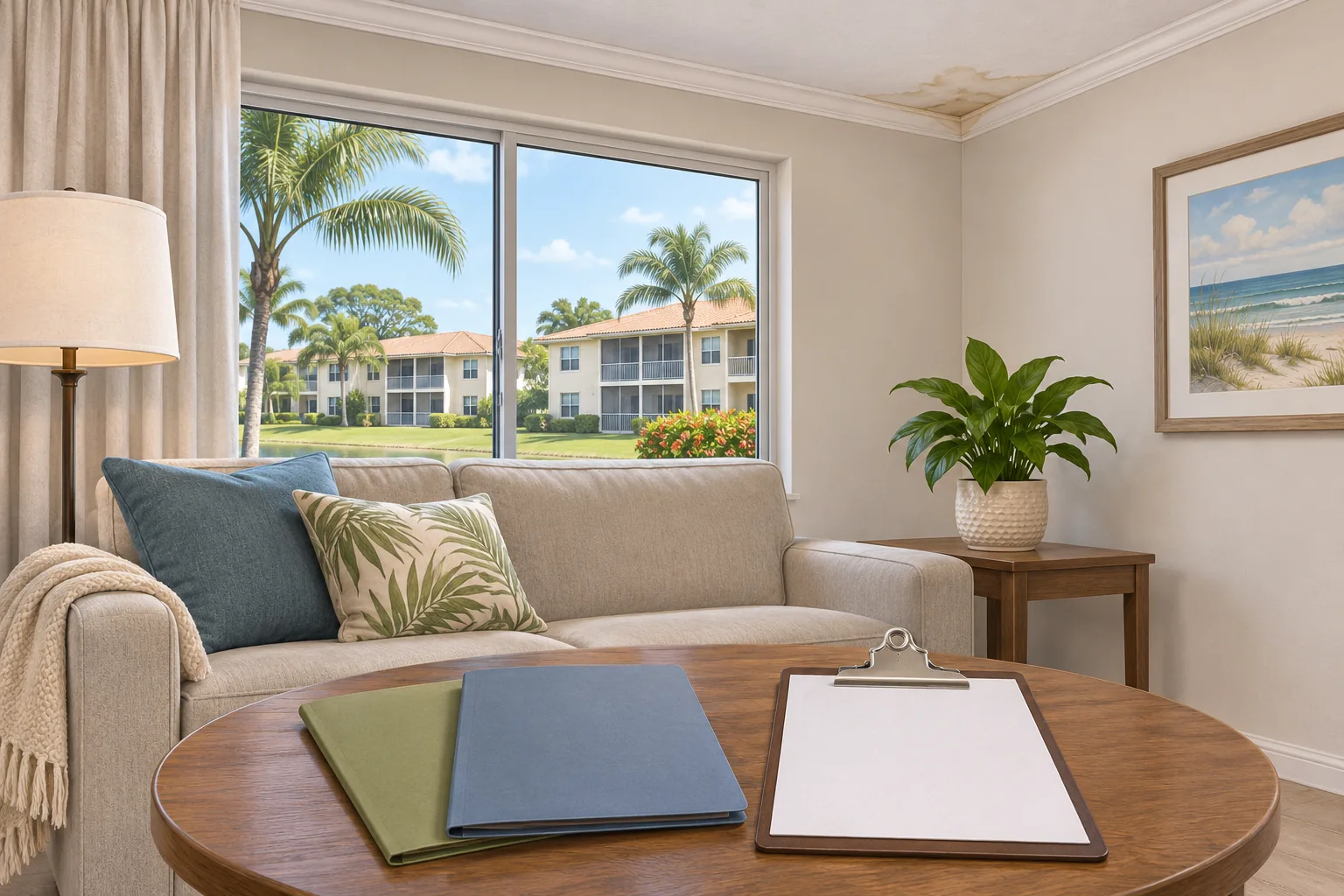
For example, “brown mark on living-room ceiling near the window” records an observation. “The upstairs owner caused the leak” is a conclusion that a photograph alone cannot establish. Keep a plumber’s findings or a manager’s explanation in a separate field with the source and date. Do not enter another unit or unsafe space to investigate.
2. Keep notice and response records for each recipient
Create two correspondence sections: your unit-owner claim and your association communication. Keep any association claim reference provided by the authorized representative clearly labeled as theirs. Use verified private channels, and record the date sent, attachments and acknowledgment for each recipient. Do not assume that copying the manager on an email opens an insurance claim.
Ask the association who is coordinating inspection and repairs, what documents they need from you and how to report additional observations. Ask your insurer what notice and supporting records it requires. If you cannot obtain an association document immediately, record the request and follow up; do not delay your own required notice while waiting.
3. Build a repair-scope question list
For every proposed repair, list the contractor’s description, the estimate date, who supplied it and whether a written response identifies who is arranging the work. Use “awaiting clarification” when responsibility is unresolved. Keep complete estimates and written explanations, rather than combining selected lines into an unofficial total.
Section 718.111(11)(f) distinguishes association-insured property from specified items that are the unit owner’s responsibility; subsection (g) addresses reconstruction and written board consent. Ask for the applicable policy provision, association document and required authorization before scheduling reconstruction. An insurance response and permission to perform work answer different questions. Consult a qualified professional if the allocation is disputed.
4. Flag overlapping descriptions before treating them as duplicates
Fictional example: an association proposal says “ceiling restoration,” while the owner’s contractor lists “ceiling finish.” Keep both original descriptions. Ask each preparer to identify the layers, area and work included. The words may describe different work or overlapping work; do not silently delete a line or assume both amounts are payable.
Your comparison note can have five fields: component, association proposal reference, owner proposal reference, clarification requested and written response received. Link each answer to the dated source. If a revised proposal replaces an earlier version, retain both and identify the current version. This helps everyone see the same question without rewriting another party’s estimate.
5. Share only what the recipient needs
Keep policy documents, claim references and contact details in the private file. Share relevant room photographs and reports through the designated channel, avoiding unrelated belongings, access codes and neighbors’ personal information. Preserve originals; create separately labeled sharing copies when redaction is necessary.
Finish with a short list of open questions and the person expected to answer each one. Check that both files reflect new inspections or scope changes that are relevant to them. Documentation does not establish coverage, extend deadlines or guarantee payment. For a Florida claim review, use the site’s contact options with the relevant private records ready; do not post them publicly.
Frequently asked questions
Clear answers, without promises.
Does notifying the association notify my insurer?+
Do not assume so. Follow your policy’s notice requirements and retain separate acknowledgments from your insurer and the association.
Can I decide responsibility from the room location?+
No. Identify the specific component and request the applicable policy and association provisions. Insurance responsibility and reconstruction authorization require separate attention.
Should I remove a repair listed in both estimates?+
Preserve both originals. Ask what each line includes and record the clarification before treating the descriptions as duplicate work.
Official sources
Sources used for this guide.
- Florida DFS — Homeowners Insurance Overview, Types of Policies
- Florida Statutes 718.111(11) — Insurance and reconstruction
- Related: Claim communication log
- Related: Policy documents for the loss period
Last editorial review: . External pages may change.