
Published · Reviewed · M&T Adjusters
This article provides general educational information. It does not interpret any policy, provide legal or safety advice, or guarantee coverage, payment, or results. The applicable policy, endorsements, facts of the loss, and insurer process control each claim. For health, fire, electrical, structural, or contamination hazards, follow public-authority and qualified-professional instructions.
Wait for safe access and preserve official records
Do not enter until the fire department or other authority permits access, and continue following restrictions for structural, electrical, air-quality, and contamination hazards. Obtain the incident number and request available public reports through the proper process.
From a safe location, photograph exterior elevations, openings, roof conditions, firefighting access, and visible water or debris. Record the timeline of discovery, alarms, emergency response, and access without speculating about origin.
- Keep fire-department and emergency vendor information.
- Do not disturb a restricted origin area.
- Use respiratory and other protection only as directed by qualified professionals.
- Tell the insurer immediately if the property cannot be occupied or secured.
Divide the loss into building and contents zones
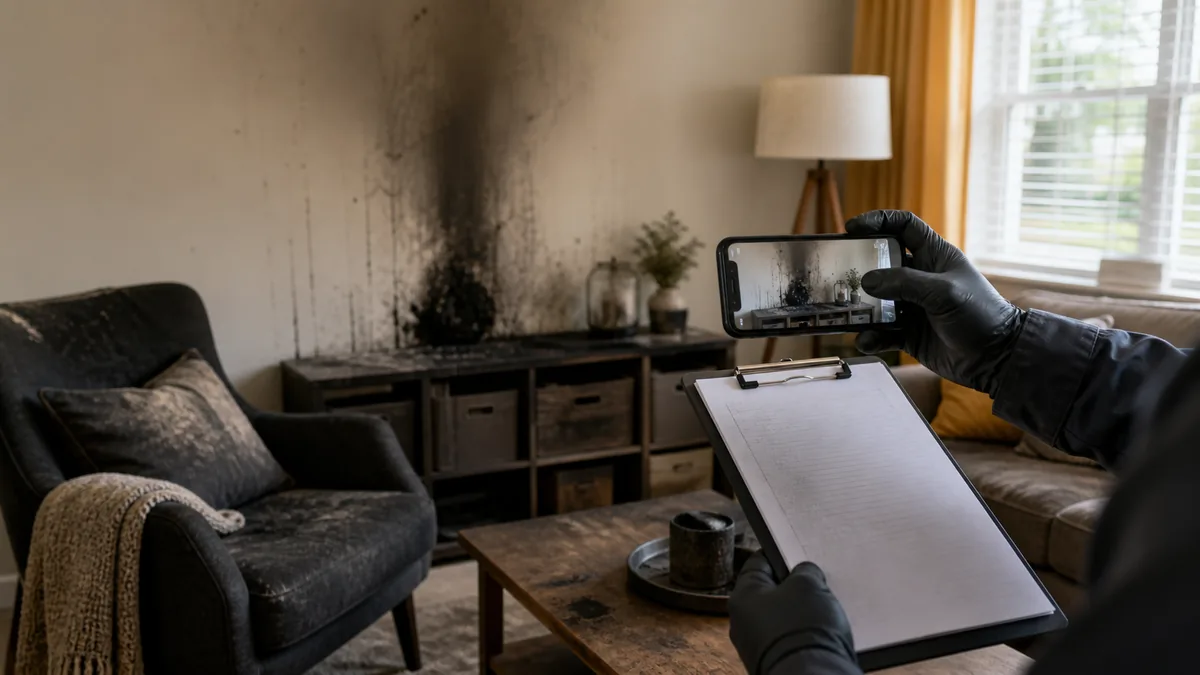
Create a room list and classify visible effects: direct fire or heat, smoke or soot, suppression water, openings, mechanical or electrical, and unaffected reference areas. Photograph wide room context before close details. Note surface, finish, color, odor description, and whether residue transfers when a qualified professional evaluates it.
Fire residue can migrate beyond the visibly burned room. Documentation should follow actual observations and professional testing, not assume every surface is equally affected. Ask cleaning or remediation vendors to identify methods, test areas, proposed sequence, and items they consider restorable or non-restorable.
- Use a floor plan or simple room map.
- Photograph HVAC registers and pathways when relevant.
- Keep cleaning tests and reports with their room location.
- Separate emergency stabilization from final restoration scope.
Build the contents inventory in manageable passes
Begin with room videos and group photographs, then inventory by category: furniture, electronics, clothing, kitchenware, tools, art, documents, and specialty items. Give each line a unique number connected to photographs. Record brand, model, quantity, age, condition, and proof of ownership where available.
Do not guess precise purchase dates or values. Use reasonable descriptions and mark estimates as estimates. Prior photographs, online receipts, credit-card statements, manuals, gift records, and warranty registrations may help reconstruct the inventory. Redact private information before sharing beyond the claim participants.
- Record whether an item is present, missing, cleaned, stored, or disposed.
- Ask vendors for pack-out and chain-of-custody lists.
- Photograph serial plates when safe and legible.
- Back up the inventory and source documents.
Track displacement, cleaning, and repair decisions
Keep lodging, meals, laundry, transportation, pet boarding, storage, and other displacement records if potentially relevant under the policy. Save baseline spending information so increased costs can be distinguished from ordinary expenses.
For every building or contents decision, request an itemized written explanation. Track samples, testing, cleaning attempts, storage locations, estimates, approvals, and payments. Coverage and valuation methods differ, so organize the facts before drawing conclusions about what should be paid.
- Maintain a daily displacement and expense log.
- Keep receipts and proof of payment.
- Record vendor access and movement of contents.
- Compare estimate line items with the documented room inventory.
Frequently asked questions
Clear answers, without promises.
Can I enter after the flames are out?+
Only after the responsible authority permits access and subject to continuing professional safety restrictions.
Should I throw away smoke-damaged contents?+
Follow health and safety direction. When disposal is necessary, document items first when safe and retain the inventory, photos, and disposal record.
Does visible soot determine whether an item must be replaced?+
Not by itself. Material, contamination, cleaning feasibility, policy terms, and qualified evaluation may all matter.
Official sources
Sources used for this guide.
- CDC — Returning Home Safely After a Disaster
- Florida DFS — Homeowners Insurance Overview
- U.S. Fire Administration — After a Home Fire
Last editorial review: . External pages may change.