Published · Reviewed · M&T Adjusters
This article provides general educational information. It does not interpret any policy, provide legal or safety advice, or guarantee coverage, payment, or results. The applicable policy, endorsements, facts of the loss, and insurer process control each claim. For health, fire, electrical, structural, or contamination hazards, follow public-authority and qualified-professional instructions.
Start with a file map, not a public upload
For a Florida public-adjuster consultation, prepare a short summary of the property damage, the policy documents available, the latest insurer correspondence and a small set of clearly identified photos. Keep a separate list of missing records and questions. Confirm the recipient and a private delivery method before sending documents. A useful first packet explains what is known, what is uncertain and what you want to discuss.
This is an organizational checklist for property owners across Florida, not a required form or a promise that an adjuster will accept a case. Florida’s Insurance Consumer Advocate recommends verifying the adjuster’s license and reviewing the contract and disclosure before signing. Its official consumer guide is linked below. Keep that hiring decision separate from preparing records for a conversation.
1. Write a one-page summary
Use a few factual lines: the general type of property, the area affected, when damage was first noticed, whether a claim has been reported and the latest written response. Separate the date you noticed damage from the date you believe an event occurred. If either is uncertain, say so. Do not turn an observation into a conclusion about the cause.
Put your main question at the top. For example, you may want help understanding which records are missing from an inspection file. Keep claim and policy numbers inside the private packet, rather than in public comments or an unrestricted shared link.
- What happened, in your own factual words?
- What has already been reported, inspected or repaired?
- Which letter, request or unresolved question needs attention now?
2. Group the records into four folders
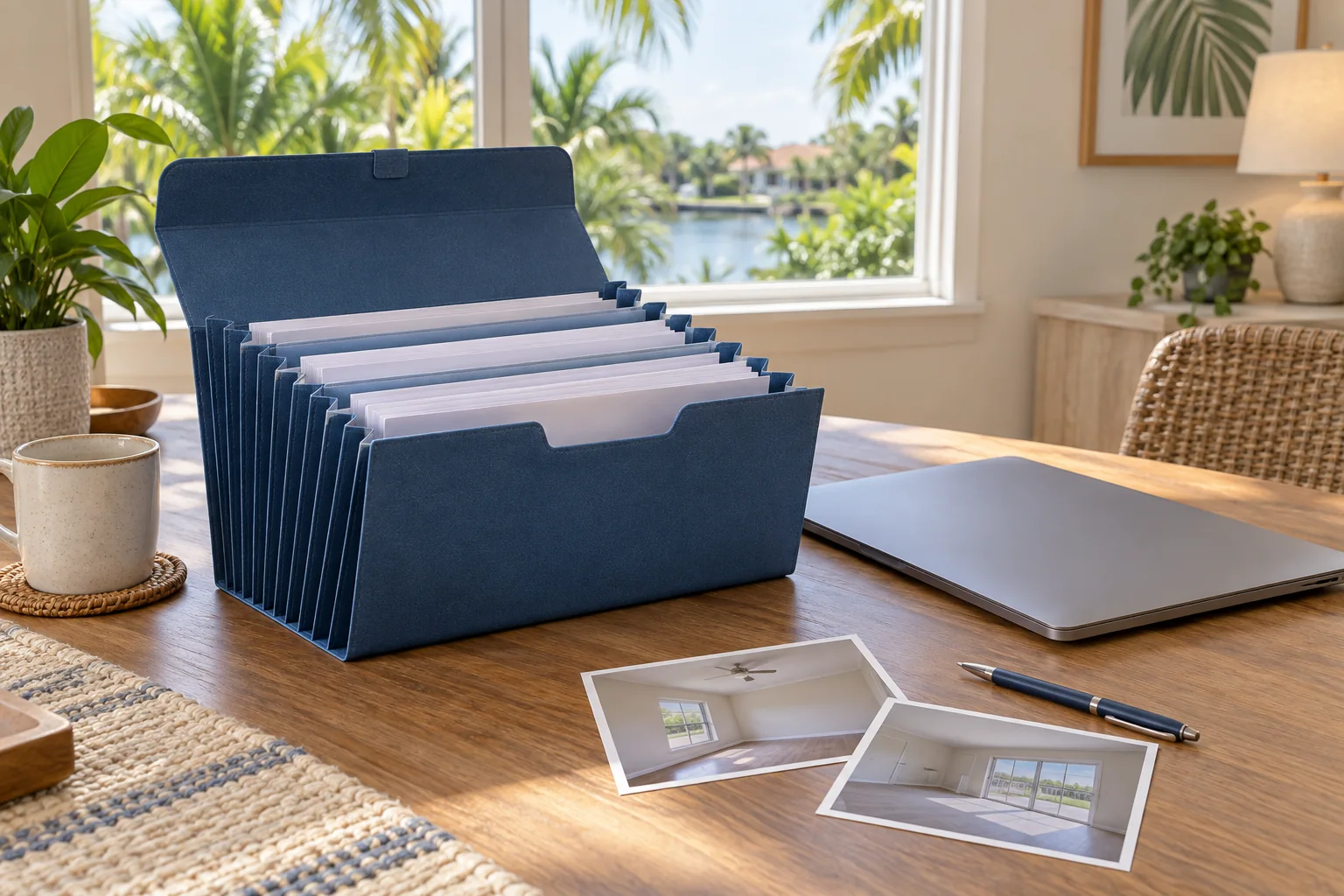
Keep the complete originals in a secure master file. Use copies for the consultation, arranged so the reader can locate a document without searching a long message thread. Ask the office which files it wants first and which formats it accepts. Do not assume an initial contact form is intended for a complete claim file.
The NAIC’s homeowners-claim guidance recommends damage photos, a damaged-property list and retained receipts. The four-folder arrangement below is an optional way to connect those records with the policy and claim correspondence; it is not a list of documents every insurer requires.
- Policy: declarations, policy wording and endorsements available for the relevant policy period.
- Claim correspondence: acknowledgment, inspection notices, requests, estimates, payment explanations or a decision letter, with their dates.
- Property evidence: a brief photo index, original images and any existing professional reports, identified by location and date.
- Repair and expense records: estimates, invoices and payment records, each identified by its actual document type.
3. List gaps without filling them in
A missing document is a question to resolve, not a reason to recreate evidence. Record what is unavailable, who may have a copy and whether you have requested it. If you only have a declarations page, label it that way instead of calling it the complete policy. If a date is based on memory, distinguish it from a dated photograph or letter.
Fictional example: a homeowner has an inspection appointment email, six room photos and a repair invoice, but cannot find the insurer’s estimate. The file map lists all three available items and marks “insurer estimate — copy requested, not yet received.” That makes the gap visible without assuming the inspection produced a particular finding. This example is not an M&T case.
4. Agree on private delivery and keep a copy
Verify the office’s contact details independently before using a document-upload link. Ask who should receive the packet and how sensitive records are handled. Do not post a policy, claim letter, signature, account number or full property address in a public review, social-media comment or open file-sharing folder.
If a record contains unrelated financial information, ask what is needed before sending a redacted copy; keep the unaltered original securely. Never provide account passwords or one-time security codes as part of a consultation packet. Retain the exact files sent, the date and any receipt confirmation so you know which version the recipient received.
5. Finish with focused questions
Ask which missing records would help, whether any immediate request needs attention and what the next step would involve. If representation is proposed, read the complete written terms before deciding. The Florida consumer guide cautions that a public adjuster cannot promise a faster or larger settlement.
Preparing this packet does not extend a policy or claim deadline, and arranging a conversation does not itself establish representation. Raise a dated insurer request promptly instead of waiting for a perfect folder. The related guides below explain license and contract checks, and how to keep estimates, invoices and payment records distinct.
Frequently asked questions
Clear answers, without promises.
Do I need every document before the first conversation?+
Ask the office what it needs initially. Identify the records you have and list anything missing. Do not guess at missing facts or delay a time-sensitive response while trying to assemble a complete packet.
Should I email my entire bank statement?+
Ask which evidence is relevant and which private channel to use. Preserve the original and discuss whether a copy with unrelated details removed is appropriate. Do not place financial records in public comments or open links.
Does preparing a packet mean I have hired an adjuster?+
No. Organizing or sharing records for a consultation does not by itself establish representation. Review any proposed written agreement, services and fees before deciding, and keep a completed copy of anything you sign.
Official sources
Sources used for this guide.
- Florida Insurance Consumer Advocate — Working With a Public Adjuster
- NAIC — Filing a Homeowners Claim
- Related: Choosing a Licensed Public Adjuster in Florida
- Related: Florida Estimate, Invoice and Payment Records
Last editorial review: . External pages may change.