
Published · Reviewed · M&T Adjusters
This article provides general educational information. It does not interpret any policy, provide legal or safety advice, or guarantee coverage, payment, or results. The applicable policy, endorsements, facts of the loss, and insurer process control each claim. For health, fire, electrical, structural, or contamination hazards, follow public-authority and qualified-professional instructions.
Start with the product, then the availability question
When flooring or tile needs repair after property damage in Florida, a useful material record answers three separate questions: what is installed, what can be obtained now, and what alternative has been proposed? Keep the evidence for each answer together. A similar-looking sample, an unavailable listing and a confirmed discontinued product are different pieces of information.
This guide offers an optional documentation method, not a test for insurance coverage or a determination of the required repair area. Florida DFS’s coverage FAQs, linked below, explain that policy forms vary and the actual policy controls coverage. Ask the insurer to explain how the documented material issue affects its proposed scope.
1. Give the installed material a traceable identity
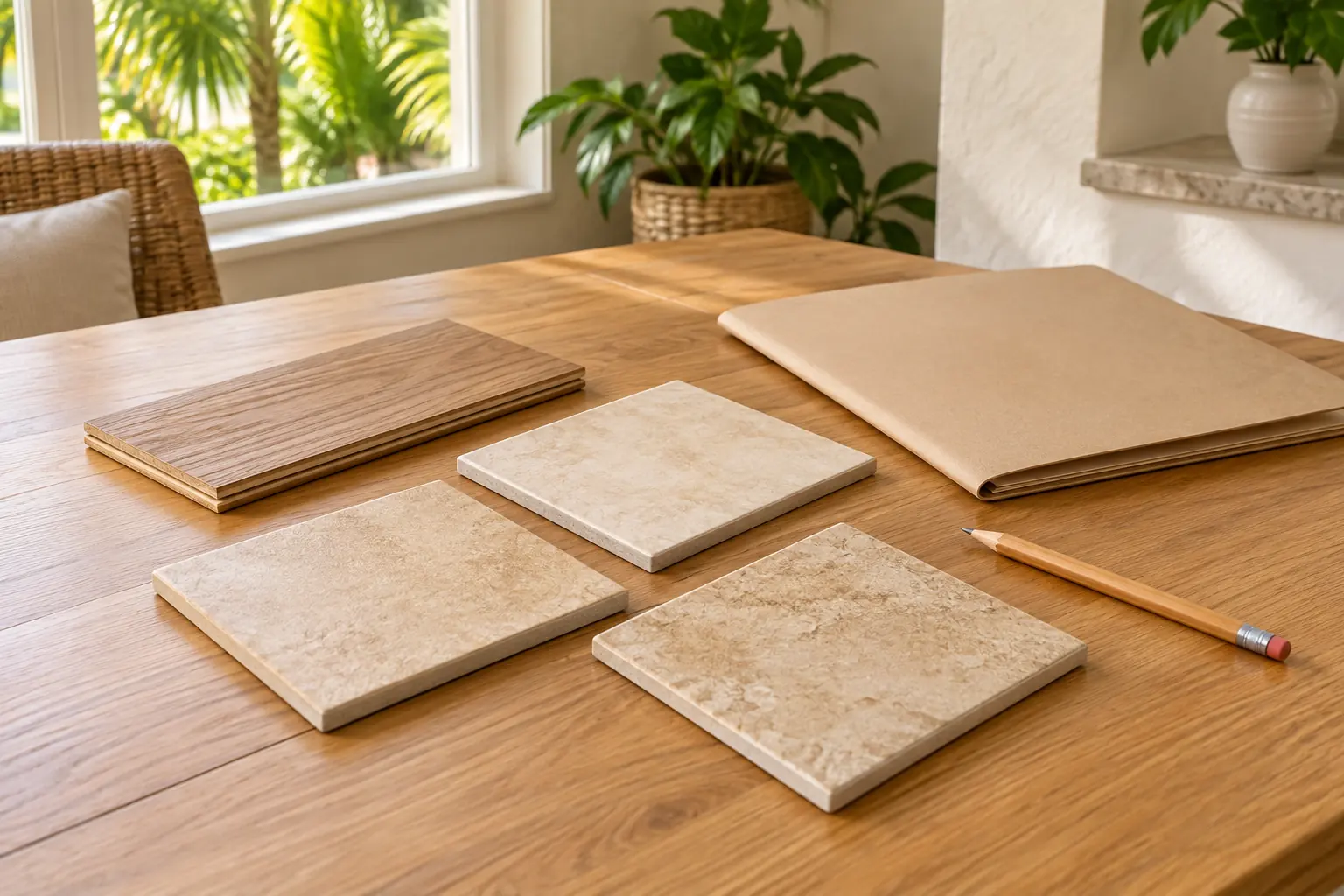
Create one entry for each material and location, such as “kitchen floor — material A.” Save an overview photograph connecting it to the room, then a clear detail of the visible finish. If safely available, photograph an original carton label, leftover sample, purchase invoice or installer record. Keep the product code exactly as shown; do not substitute a retailer’s similar display name.
Record the manufacturer, collection, color, dimensions and any lot or shade code only when supported by a label or other record. Mark unknown fields as unknown. Appearance alone may not establish whether a surface is ceramic, porcelain or another material. Ask the repair professional to identify uncertainty rather than turning a guess into a fact.
- Separate photographed identifiers from information recalled from memory.
- Label existing loose samples by location; do not detach installed material just to complete the record.
- Keep original photographs and document pages, with a separate note explaining each reference.
2. Make availability checks specific and dated
Send the exact identifier to the supplier or manufacturer through its verified contact channel. Ask what it can confirm: whether the product is still made, whether it has stock, what quantity is available, and whether any delivery estimate is provisional. Save the dated written response, the business name and the identifier used in the inquiry.
“Not in stock at this branch” does not establish that a product is discontinued. An old online listing does not confirm that the needed quantity can be supplied. Preserve those limited findings as stated. If a supplier cannot identify the material from the photograph, record that result and ask what additional information would help.
3. Describe the proposed substitute separately
Give each proposed replacement its own entry. Attach its product information and identify who proposed it and when. Ask the repair professional to explain relevant differences in size, thickness, finish or installation requirements. Do not describe two products as identical solely because a phone photograph looks similar.
Keep any price quotation tied to its product code, quantity, date and stated inclusions. A material-only quote is not the same as an installed repair estimate. Preserve labor, preparation and other scope descriptions separately. The NAIC’s claim guidance, linked below, recommends documenting damage and retaining repair receipts; these product records add context to that broader file.
4. Turn a discrepancy into a focused question
Fictional example: an estimate lists tile A, but a supplier says that its branch has only six pieces and cannot confirm another shipment. The repair proposal calls for eighteen. Save the response and ask whether the estimate assumes another source or a different product. Do not relabel the response as proof that tile A is discontinued. This example is not an M&T case or a payment result.
A concise submission might say: “The attached estimate identifies material A. The supplier response dated October 20 describes limited stock. Please explain the product and availability assumptions in the proposed repair scope and any further documentation needed.” Reference the exact estimate version and relevant room. Our related missing-item guide explains how to keep such questions tied to specific estimate entries.
5. Preserve the answer and update the record
Add later supplier replies or revised proposals as new dated entries. Keep earlier versions so the sequence remains understandable. Note whether a substitute is merely suggested, priced, selected or installed; those statuses should not be treated as interchangeable. Link actual invoices and payment records only when they exist.
Send the file through a verified private claim channel. Remove account details and home addresses from anything shared publicly. Material identification and availability evidence can help clarify a repair proposal, but they do not by themselves resolve coverage, matching requirements or the final payment. Request a written explanation when the insurer’s position remains unclear.
Frequently asked questions
Clear answers, without promises.
Does a supplier saying “unavailable” prove that the material is discontinued?+
No. Record the exact statement, date, product identifier and scope of the search. Ask whether the supplier means local stock, a temporary delay or confirmed discontinued production.
Should I remove a tile to identify it?+
Do not remove installed material merely to complete this file. Start with existing labels, loose leftovers, invoices and safe photographs; ask the appropriate repair professional what further identification is needed.
Does a discontinued finish automatically mean the insurer will replace an entire floor?+
No automatic coverage conclusion follows from this record. The policy, applicable requirements and claim facts need review. Ask the insurer to explain its proposed scope using the documented product information.
Official sources
Sources used for this guide.
- Florida DFS — General Insurance Coverage FAQs
- NAIC — Filing a homeowners claim
- Related: Questions about missing estimate items
- Related: Estimates, invoices and payment records
Last editorial review: . External pages may change.