
Published · Reviewed · M&T Adjusters
This article provides general educational information. It does not interpret any policy, provide legal or safety advice, or guarantee coverage, payment, or results. The applicable policy, endorsements, facts of the loss, and insurer process control each claim. For health, fire, electrical, structural, or contamination hazards, follow public-authority and qualified-professional instructions.
Keep one record from pickup to return
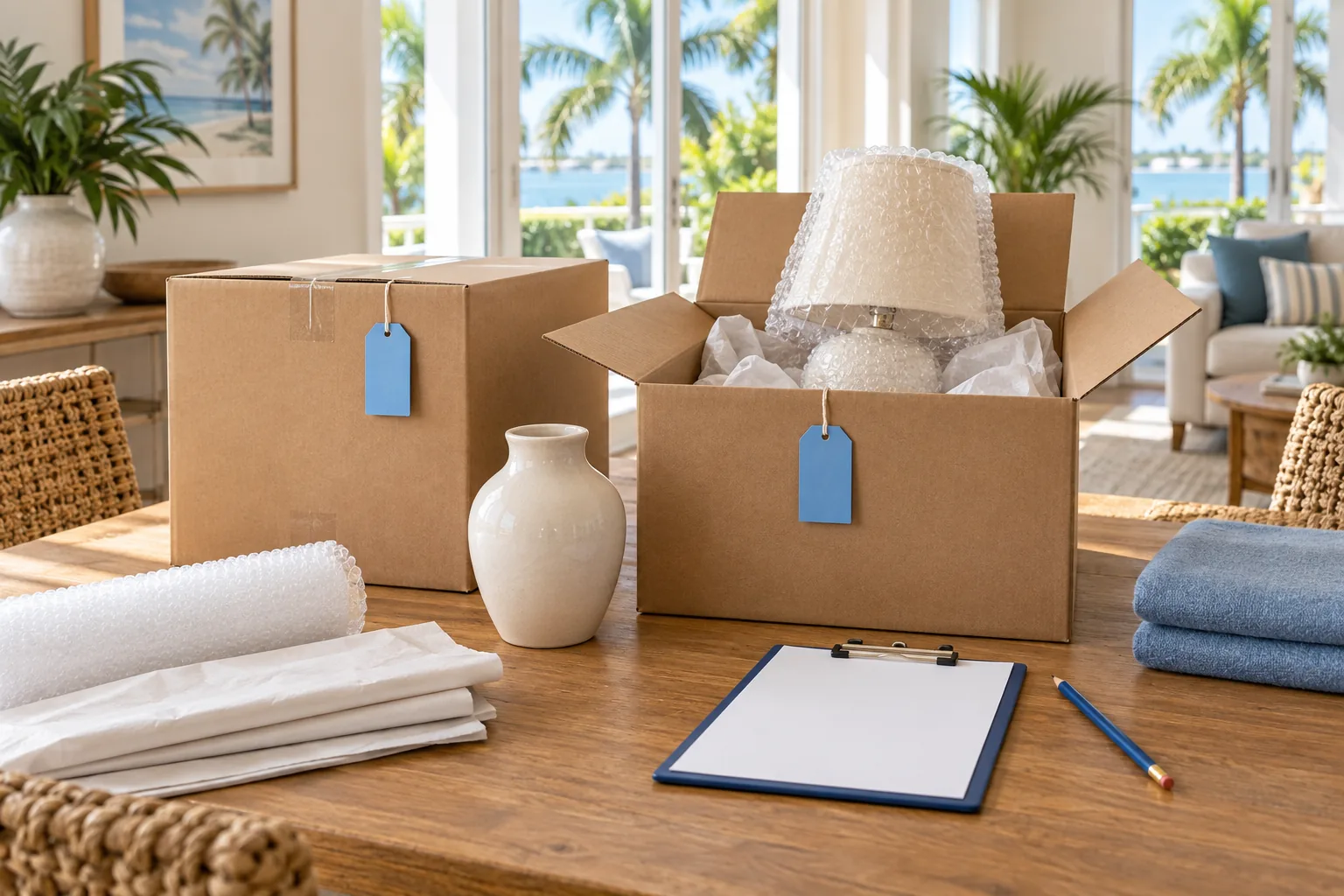
If belongings leave your Florida home for cleaning or storage after property damage, connect each item or clearly described group to a pickup list, its destination and a return record. Keep your own copy of the vendor’s list and explain any differences in writing. An inventory describes what you have; a transfer log records where it went and what happened next.
Florida’s Insurance Consumer Advocate recommends gathering household inventory records, photos, video and serial numbers after a disaster. The official recovery guidance is linked below. The tracking method here is an optional organizational aid, not an insurer’s required form or a conclusion that removal, cleaning or storage is covered.
1. Agree on what is moving
Ask the company to identify which belongings it proposes to collect, where they will go, who will be your contact and how it will describe the contents. Clarify whether an entry represents one item, several items or a sealed carton. A count of six boxes does not identify every object inside them.
Before signing, read the proposed work and charges and ask about unclear terms, including storage periods and return arrangements. Separately ask your insurer about any applicable claim instructions. A pickup receipt records a transfer; do not treat it as an insurer’s coverage decision. Do not delay urgent safety measures to complete paperwork.
- Save the company’s dated item list and the version you reviewed.
- Identify the destination and a verified contact for questions.
- Keep the service agreement, estimate, pickup record and insurer correspondence as separate documents.
2. Connect item numbers to photographs
Use a stable reference such as “living room — item 07” and record the vendor’s number beside it if different. Keep the original description, quantity and available identifying details together. Photograph the item and its label before collection when safe and permitted. Preserve original files; place notes on separately identified copies.
The NAIC’s homeowners-claim guidance recommends a damaged-property list, photographs and retained receipts. Its source link below supports that general recordkeeping; it does not prescribe this transfer log. Do not enter a restricted area or handle contaminated belongings to fill a missing field. Follow public-authority and qualified-professional instructions.
- Record the room, item description, quantity and photo reference.
- Distinguish an individual item number from a carton or group number.
- Describe visible condition factually; leave cleaning feasibility to qualified evaluation.
3. Add one entry each time the status changes
Record the pickup date, the company receiving the belongings, the listed destination and the supporting document. When you learn of a move to another location, a cleaning decision or a proposed return, append a dated entry. Identify whether the update came from a written vendor record, a conversation or your own observation.
Keep “collected,” “in storage,” “cleaning proposed,” “cleaning completed” and “returned” distinct. An item listed for cleaning has not necessarily been cleaned, and a delivery appointment does not establish that everything arrived. If you lack an update, mark the status unknown and request clarification.
4. Reconcile differences without erasing the history
Fictional example: your list shows one floor lamp as item 07, while the vendor’s pickup list calls it item 42. Record both numbers on the same line. Later, a return sheet lists the lamp but you receive only its base. Note the missing shade, retain the delivery sheet and request a written explanation. Do not change the original pickup list to make the records appear to agree. This is not an M&T case.
During a safe return check, compare descriptions and quantities with the earlier lists and document visible differences. Keep the dated correction or clarification alongside the original record. A discrepancy is something to investigate; it does not establish who is responsible or what an insurance policy will pay.
5. Keep costs and private records connected
Link cleaning, transport and storage invoices to the relevant item or group references when the documents allow it. Ask for clarification if an invoice’s scope or storage dates are unclear. Keep proof of payment separately from an estimate or unpaid invoice, and retain the insurer’s written explanation of any decision.
Share records through a verified private channel with the appropriate claim participants. Keep addresses, account details, signatures and personal photographs out of public posts. M&T’s related Florida guides below explain photo organization and the difference between estimates, invoices and payment records. This tracker does not authorize services, extend a deadline or guarantee reimbursement.
Frequently asked questions
Clear answers, without promises.
Does a box count replace an item inventory?+
No. A box count helps track containers, but it may not identify their contents. Keep any item-level list and connect it to the box references. If a sealed box’s contents are unknown, say so rather than guessing.
What if the vendor uses different item numbers?+
Keep both sets of numbers in a cross-reference. Preserve the original lists and ask about unclear matches. Do not assign two similar objects to the same line without confirming which is which.
Does the insurer have to pay every storage invoice?+
An invoice records a charge, not a coverage decision. Applicable policy terms, facts and the insurer’s review matter. Ask for a written explanation and keep the supporting records; this organizational method does not promise payment.
Official sources
Sources used for this guide.
- Florida Insurance Consumer Advocate — Disaster recovery records
- NAIC — Filing a homeowners claim
- Related: Florida property-claim photo documentation
- Related: Estimate, invoice and proof of payment
Last editorial review: . External pages may change.