
Published · Reviewed · M&T Adjusters
This article provides general educational information. It does not interpret any policy, provide legal or safety advice, or guarantee coverage, payment, or results. The applicable policy, endorsements, facts of the loss, and insurer process control each claim. For health, fire, electrical, structural, or contamination hazards, follow public-authority and qualified-professional instructions.
Describe where the water came from
Start with observable facts: rain through an opening, a supply-line release, appliance overflow, roof drainage, rising surface water, storm surge, or another route. Record the discovery time, weather and building conditions, water direction, highest visible line, and areas reached. Avoid labeling cause or coverage beyond what the evidence supports.
NFIP guidance distinguishes flood water entering from the ground up from rain entering through storm damage above, but only the actual policy and facts determine how a loss is handled. Florida properties may involve homeowners, condominium, commercial, excess, or separate flood policies. Give timely notice to every insurer that may apply.
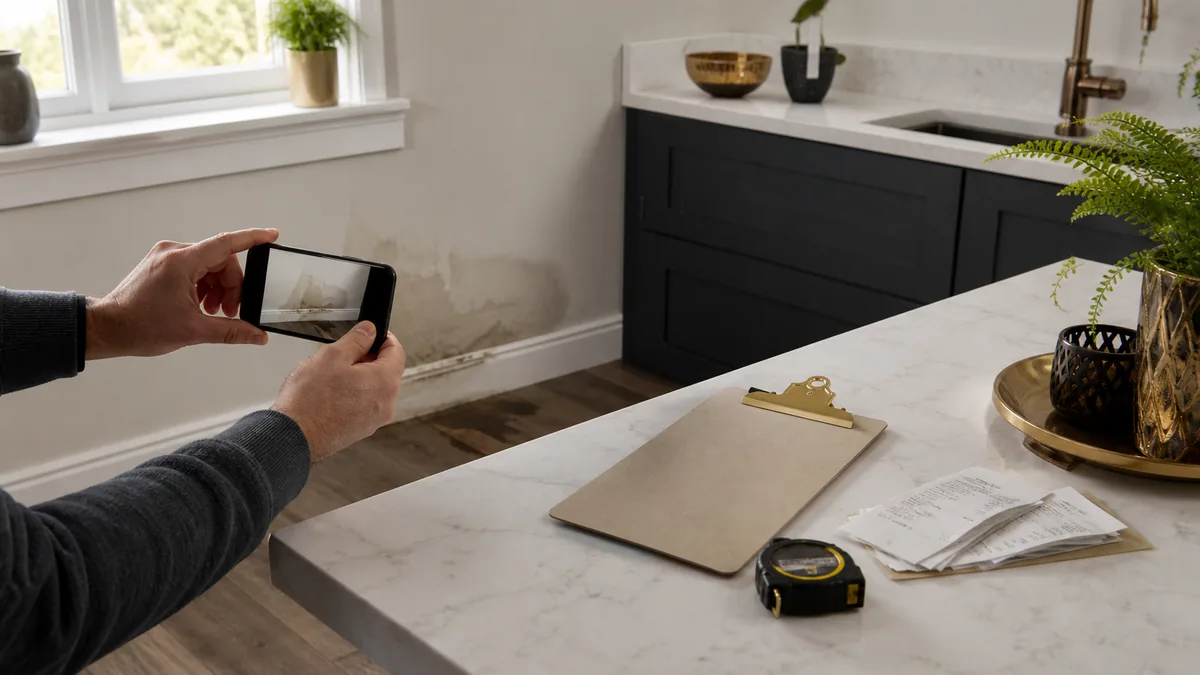
- Photograph exterior and interior waterlines.
- Show entry points and the path through adjoining rooms.
- Record weather alerts and event dates without treating them as proof of building cause.
- Keep each insurer’s claim number and requests in a separate subfolder.
Document materials before extraction or demolition
Photograph floors, baseboards, drywall, insulation, cabinets, contents, mechanical systems, and concealed areas as they become visible. Ask mitigation professionals for initial moisture maps, equipment logs, daily readings, photographs, and the itemized work authorization.
Emergency drying can be time-sensitive, yet documentation should occur first whenever safe. If materials must be removed, photograph their location, dimensions, layers, finish, and condition. Keep safe samples when requested and appropriate; never retain contaminated material contrary to health guidance.
- Record room dimensions and affected material heights.
- Preserve model and serial data for appliances and equipment.
- Separate extraction, drying, cleaning, and reconstruction records.
- Ask vendors to explain changes to scope in writing.
Track cleanup and potential health issues carefully
Water may involve electricity, sewage, chemicals, microbes, or unstable finishes. Use qualified professionals and follow public-health instructions. Personal safety and prompt hazard control come before creating a perfect claim file.
Maintain a timeline of extraction, drying, inspections, containment, cleaning, and clearance. Do not assume that odor, staining, or a meter reading proves the origin or extent. Technical conclusions should come from appropriately qualified professionals.
- Do not energize wet electrical systems.
- Keep occupants away from contaminated or structurally unsafe areas.
- Photograph disposal before removal when safe.
- Retain invoices, reports, laboratory results, and clearance documents.
Review each written decision against the submitted record
When an insurer issues an estimate, reservation, payment explanation, or coverage letter, compare the rooms, quantities, materials, and facts described with your records. Note omissions or factual differences without changing original evidence.
Ask written questions when terminology is unclear and provide organized supporting records through the approved channel. A difference in estimate does not automatically establish wrongdoing or coverage; it identifies an issue that may need documentation and discussion.
- Check that every affected room appears in the estimate.
- Compare measurements and material descriptions.
- Track deductibles, depreciation, prior payments, and requested documents.
- Keep the envelope or electronic transmission date for formal letters.
Frequently asked questions
Clear answers, without promises.
Is every water loss covered by homeowners insurance?+
No. Policies differ, and exclusions, limits, endorsements, cause, timing, and duties after loss matter. Separate flood insurance may apply to some ground-up flooding.
Should I wait for an adjuster before drying the property?+
Do not delay urgent safety or reasonable damage-prevention work. Document first when safe, notify the insurer, and preserve detailed vendor records.
Can M&T decide whether my loss is flood or homeowners coverage?+
M&T can document and present facts within its licensed role. The applicable policy and claim process control coverage decisions.
Official sources
Sources used for this guide.
- NFIP — Start a Flood Insurance Claim
- NFIP — Claims Checklist for Policyholders
- Florida DFS — Homeowners Insurance Overview
Last editorial review: . External pages may change.