
Published · Reviewed · M&T Adjusters
This article provides general educational information. It does not interpret any policy, provide legal or safety advice, or guarantee coverage, payment, or results. The applicable policy, endorsements, facts of the loss, and insurer process control each claim. For health, fire, electrical, structural, or contamination hazards, follow public-authority and qualified-professional instructions.
Record what was found, who found it and what changed
After a plumbing leak at a Florida property, ask for a written service record that distinguishes the location inspected, the plumber’s observations, any tests performed and the work completed. Add your own discovery timeline separately. This makes the file easier to follow without turning an incomplete service note into a claim about when the leak began or what insurance must pay.
This is an optional organization method for homeowners, not a technical diagnosis. Florida DFS’s General Insurance Coverage FAQs, linked below, stress that policy forms differ and your own policy controls specific coverage. A plumber’s findings can help explain the physical problem; ask the insurer to explain its coverage position using the relevant policy wording.
1. Separate discovery from the service visit
Write down when you first noticed water, a stain or another visible change, and where you were looking. If you only remember an approximate time, label it approximate. Record the date and time of the plumber’s visit in a different field. The time you discovered a wet cabinet is not automatically the time a connection began leaking.
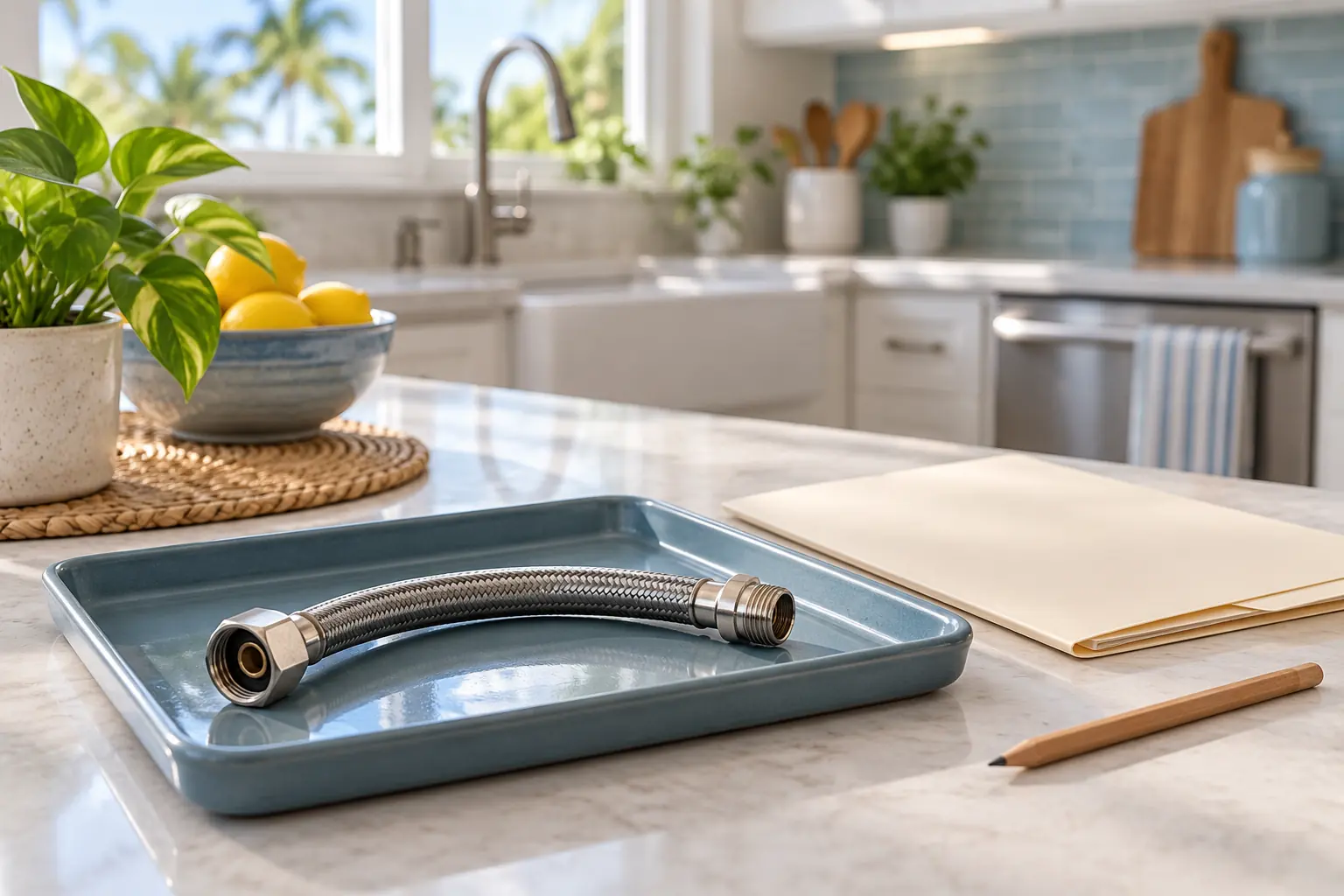
Keep original photos taken safely before and after the work. Identify the room and the visible feature in each file, such as the cabinet beneath the kitchen sink. Do not open walls, remove fittings or recreate a leak for a photograph. Our related water-damage guide provides broader context for documenting where water appeared.
2. Ask for observations and test limits
Request the service company’s name, visit date, inspected fixture or line, and a description of what the technician actually observed. If the plumber gives a cause opinion, preserve the wording and ask what observations support it. Keep that professional opinion distinct from your own notes and from a final insurance determination.
If testing was performed, ask the plumber to describe the method, area tested, result and any limitation. “No leak observed during this visit” does not describe every earlier condition. Do not change it to “there was never a leak.” If the report does not establish duration or examine a concealed area, leave those points unresolved.
- Which component and location were inspected?
- What was observed before any work changed the condition?
- What did the test establish, and what remained outside the inspection?
- Is a further inspection recommended, and by whom?
3. Connect the findings to the work performed
Keep the diagnostic note, repair description, invoice and any completion photos together, with their dates intact. Ask the company to distinguish a temporary measure from a completed repair and identify any work still proposed. A paid invoice records a charge and payment; it may not explain the technician’s findings unless those details are included.
Florida’s Insurance Consumer Advocate, in Be Your Own Advocate below, advises documenting necessary emergency repairs, retaining receipts and keeping damaged property when feasible. Ask the plumber and insurer about safe preservation of a removed component before disposal. Do not delay necessary protection or handle an unsafe item just to build the file.
4. Clarify a vague note without rewriting it
Fictional example: a service invoice says “supply connection replaced,” while your photos show water beneath the sink. Ask the company which connection was replaced, what it observed and whether it recorded a test afterward. Keep its dated answer with the original invoice. Do not fill the gap by stating that a pipe burst or that the entire floor was damaged. This is an illustration, not an M&T case.
A short request could read: “Please clarify the location and component inspected on the visit date, the findings before replacement, the work performed and any remaining inspection limits.” If the company corrects its report, retain both versions and the date of correction. Do not edit the professional’s original document yourself.
5. Submit a small, traceable packet
Prepare a one-page index linking your discovery note, the service report, selected original photos and the invoice. Send it through a verified private claim channel and retain the submission confirmation. The NAIC’s filing guidance below supports documenting damage and keeping repair receipts; this index is simply a practical way to connect those records.
List unanswered questions explicitly. Ask the insurer what additional evidence it needs and whether the new findings affect its assessment. Keep diagnostic costs, component repairs and repairs to affected building surfaces identifiable in the records without assigning coverage yourself. Exclude account details and property identifiers from anything shared publicly.
Frequently asked questions
Clear answers, without promises.
Does a plumber’s invoice prove when a leak started?+
Not necessarily. An invoice may show the service date and work performed without establishing when leakage began. Preserve the stated findings and ask for clarification rather than substituting the discovery date for the start date.
Should I ask the plumber to use particular insurance wording?+
Ask for accurate observations, methods and limitations in the plumber’s own words. Do not request an unsupported cause, duration or coverage conclusion. Ask the insurer separately how the documented facts relate to the policy.
What if the service company provides only a short invoice?+
Keep it and request a dated written clarification identifying the inspected component, observations, tests and work completed. If no further record is available, mark that limitation rather than creating a report on the company’s behalf.
Official sources
Sources used for this guide.
- Florida DFS — General Insurance Coverage FAQs
- Florida Insurance Consumer Advocate — Be Your Own Advocate
- NAIC — Filing a homeowners claim
- Related: Water damage and flood documentation
- Related: Estimates, invoices and payment records
Last editorial review: . External pages may change.