
Published · Reviewed · M&T Adjusters
This article provides general educational information. It does not interpret any policy, provide legal or safety advice, or guarantee coverage, payment, or results. The applicable policy, endorsements, facts of the loss, and insurer process control each claim. For health, fire, electrical, structural, or contamination hazards, follow public-authority and qualified-professional instructions.
Inspect from the ground before anyone climbs
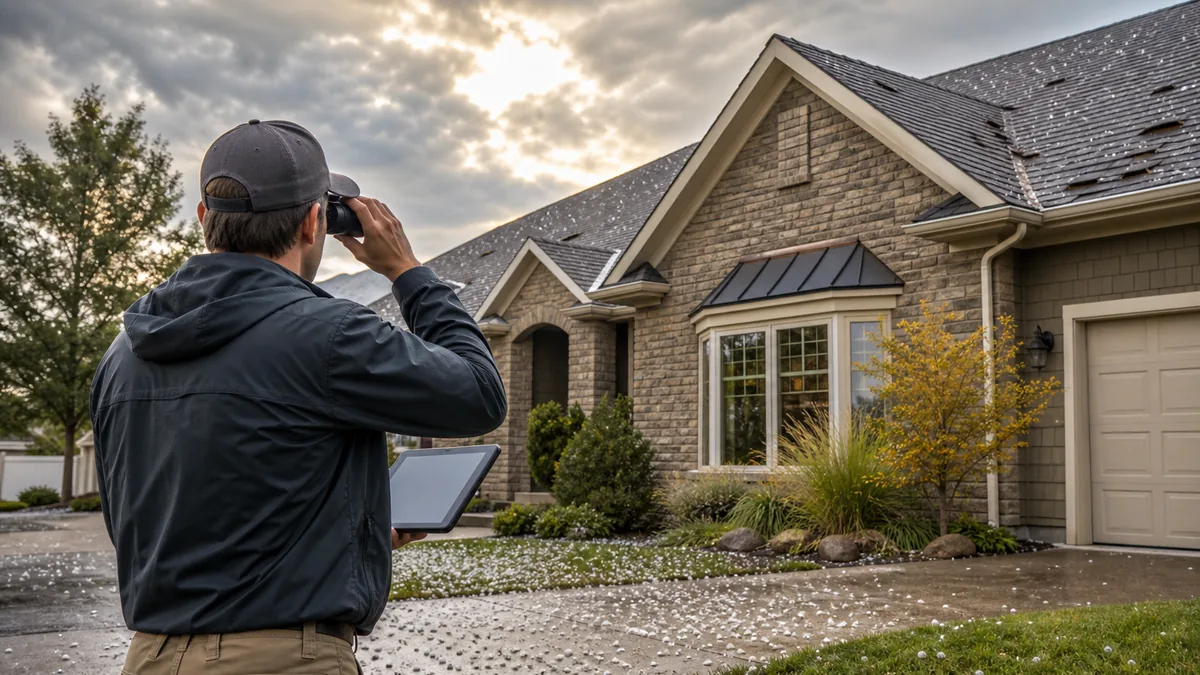
After severe weather, look from a safe location for displaced materials, openings, debris patterns, damaged vents, gutters, screens, fencing, trees, and elevations. Photograph all sides, not only the most obvious area. Do not walk on a wet, steep, storm-damaged, or potentially unstable roof.
Record the event date and relevant official weather information, but do not assume a nearby report proves what happened to a particular building. A qualified inspection should connect site conditions to the specific components and observed damage.
- Use ground-level zoom or a qualified inspector.
- Photograph roofline, slopes, edges, penetrations, and drainage.
- Capture collateral indicators such as vents, screens, siding, and soft metals.
- Preserve pre-loss maintenance and roof replacement records.
Connect exterior conditions with attic and interior evidence
When safe, document attic sheathing, framing, insulation, ventilation, and visible moisture paths. Inside, begin with room context and trace stains, openings, displaced finishes, or water effects. Record whether conditions changed during later rain.
Do not cover or repair an opening without first photographing its location and dimensions when safe. For emergency tarping or board-up, obtain before-and-after images, a diagram of the protected area, material description, invoice, and proof of payment.
- Show the vertical relationship between roof area and interior rooms.
- Record ceiling, wall, floor, and contents effects separately.
- Keep emergency protection records distinct from permanent repair bids.
- Do not remove roofing merely to create evidence.
Ask for component-specific inspection records
A useful report identifies slopes, elevations, materials, approximate age when known, observed conditions, test methods, photographs, and the inspector’s qualifications. Conclusions should be supported rather than stated as slogans.
Compare insurer and contractor scopes by component, quantity, measurement, and repair method. Differences can be discussed more effectively when each side identifies the exact item and evidence rather than relying on a single total price.
- Request photographs keyed to a roof or elevation diagram.
- Keep product, permit, and prior repair information.
- Confirm that interior resulting damage is separately described.
- Ask that hidden conditions discovered during work be documented before covering.
Keep Florida-specific timing and hurricane records together
Florida policies may use a hurricane deductible and event-specific terms. The declarations, endorsements, date of loss, storm information, and insurer correspondence should be stored together. Do not assume every named-storm loss uses the same deductible or procedure.
Florida claim-reporting rules have changed over time. Consult current official DFS information and the applicable policy promptly. An organized record helps you identify requests, inspections, decisions, and any additional documented damage without relying on memory.
- Save declarations and all deductible endorsements.
- Record every inspection date and attendee.
- Track estimates, revisions, payments, and depreciation separately.
- Submit newly discovered documented conditions promptly through the approved channel.
Frequently asked questions
Clear answers, without promises.
Should I climb onto the roof to take pictures?+
No if conditions are wet, steep, storm-damaged, or otherwise unsafe. Use safe ground views and a qualified professional when roof access is needed.
Does a weather report prove roof damage?+
It may provide event context, but building-specific inspection and documentation are still needed.
Is every storm-related roof condition covered?+
No. Coverage depends on the policy, exclusions, endorsements, cause, condition, and facts established during the claim process.
Official sources
Sources used for this guide.
- Florida Insurance Consumer Advocate — Hurricane Recovery Resources
- National Weather Service — Hurricane Safety
- National Weather Service — Thunderstorm Hazards
Last editorial review: . External pages may change.